

What Makes Rectified Porcelain the Best Choice for Sleek and Fine Joint Spacing?
What “Rectified” Really Means
Rectification is the correction. After firing, a machine grinds or cuts every edge to exact dimensions and a true right angle. The result is a straight, sharp edge that matches the slab beside it. Many outdoor ranges are rectified because patios, terraces and paths look their best with clean lines.
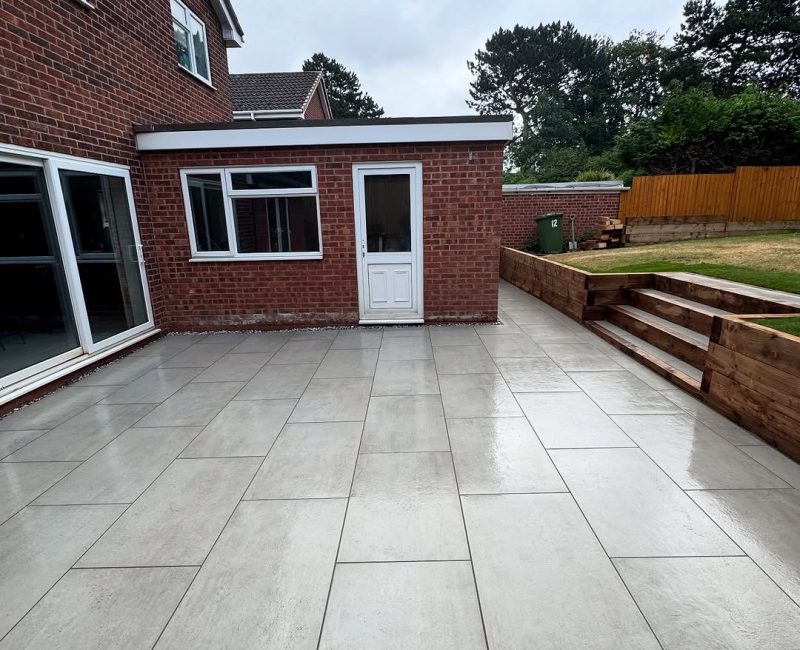
When you order from Pave World's, you're not just buying pallets — you're buying certainty on four fronts.
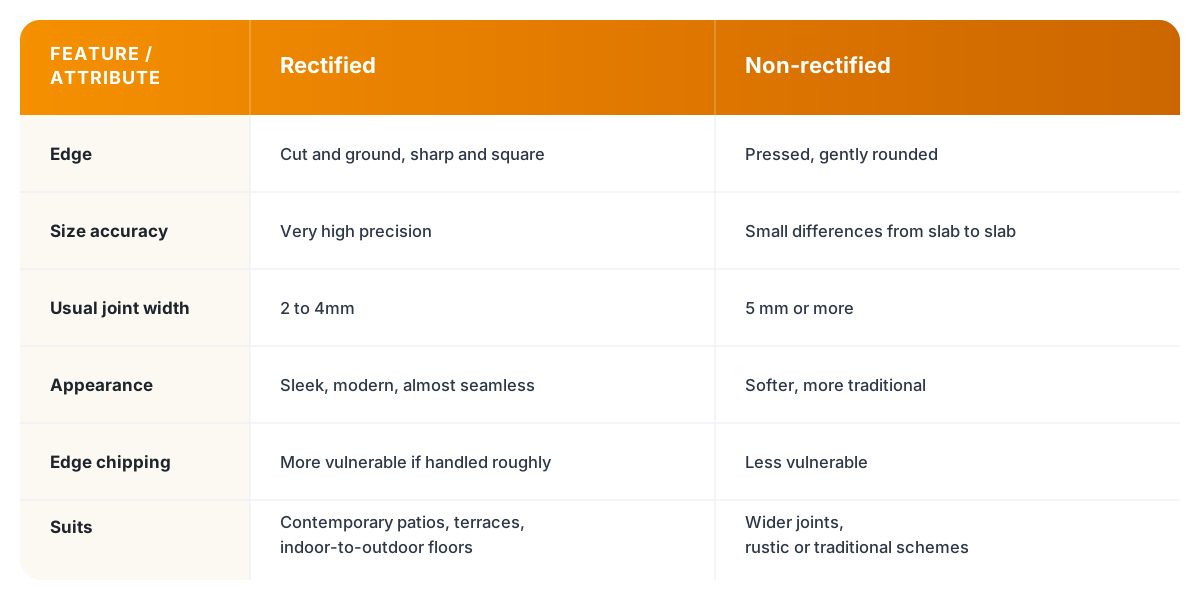
Neither wins every time. Rectified suits tight, tidy layouts. Non-rectified suits wider joints and a more relaxed look.
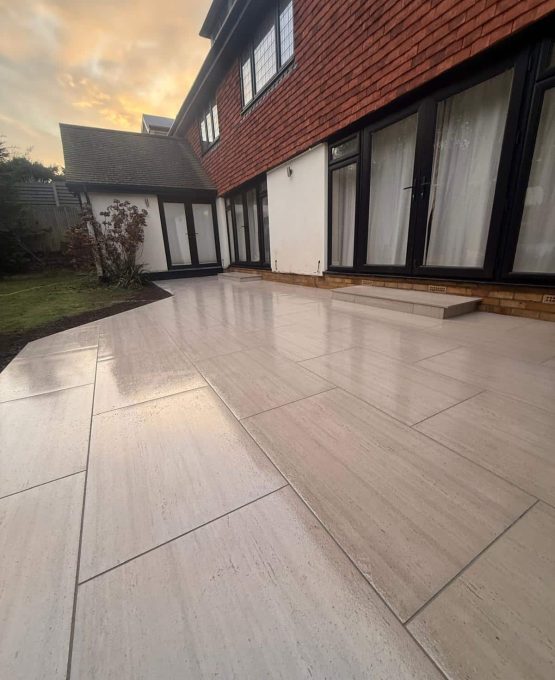
Why Slab Accuracy Decides How Slim the Joint Can Be
How Tight Is Too Tight? Joint Widths Outdoors
Indoors, installers sometimes go extremely fine. Outdoors, restraint is needed. Slabs expand and contract with temperature, and the base can shift slightly. The joint is more than decoration. It gives the slabs room to move without pressure and gives the jointing material something to grip.
For most outdoor work, 3 mm to 5 mm is a sensible range for rectified porcelain paving, depending on the method and the manufacturer’s guidance. A zero joint, with slabs touching edge to edge, is not recommended outdoors. With nowhere to move, slabs can chip, crack or lift.
Joint widths by installation method
- Pedestal paving: typically 3 mm spacers on 20 mm rectified slabs. Open joints allow drainage.
- Mortar or adhesive bed: 3 mm to 5 mm is common, filled with a suitable grout or jointing compound.
- Gravel or grass gaps: joints are wider, so rectified edges matter less.
Filling the Gap: Choosing the Right Jointing Material
The material has to flow into a slim gap, grip the edges and tolerate movement. Common choices:
- Resin jointing compound: flexible, strong and resistant to weeds.
- Porcelain or slurry grout formulated for narrow joints.
- Kiln-dried sand or fine aggregate in some dry-laid systems.
Always match the product to the joint width. A compound made for 8 mm joints will not fill a 3 mm gap properly, and a poor fill is the first thing a customer notices later.
Four More Reasons Rectified Earns Its Place
- Straighter lines. Square slabs keep their lines true over long distances. On a big terrace, a small error repeated row after row can drift visibly off course.
- A better match for large formats. The larger the slab, the more any size error shows. Formats such as 900 × 600 mm and 1200 × 600 mm perform best with rectified edges.
- A more even surface. Consistent joints and sharp corners help water drain predictably and give a uniform finish.
- Easier upkeep. With fewer wide gaps to trap debris, cleaning is slightly easier.
Handle With Care: Where Rectified Slabs Go Wrong
A rectified edge is precise, but it is also exposed. These are the points worth passing on to customers and installers.
- Edge handling: a sharp edge can chip if slabs are dropped, stacked carelessly or knocked together. Carry slabs on edge and use a suction lifter on site.
- Cutting: a site cut will not match the factory edge, so keep cut edges against walls or borders where they are hidden.
- Shade variation: colour can still differ between batches. Mix slabs from several packs as you lay.
- Level base: tight joints show up lippage, the height difference between neighbouring slabs. The base must be flat and the bedding even.
- Wrong jointing product: a compound that cannot fill a narrow joint leaves voids, and voids collect water and dirt.
Rectified Is Not the Same as Thicker
Which Edge for Which Job?
Choose rectified when:
- The customer wants narrow, even joints and a modern look.
- Large-format slabs are being laid.
- Indoor and outdoor floors need to match.
- The job is a pedestal terrace or balcony.
- A very straight pattern is needed over a long run.
Choose non-rectified when:
- The look is rustic or traditional.
- Wider joints are wanted.
- The customer wants a more forgiving edge on a busy site.
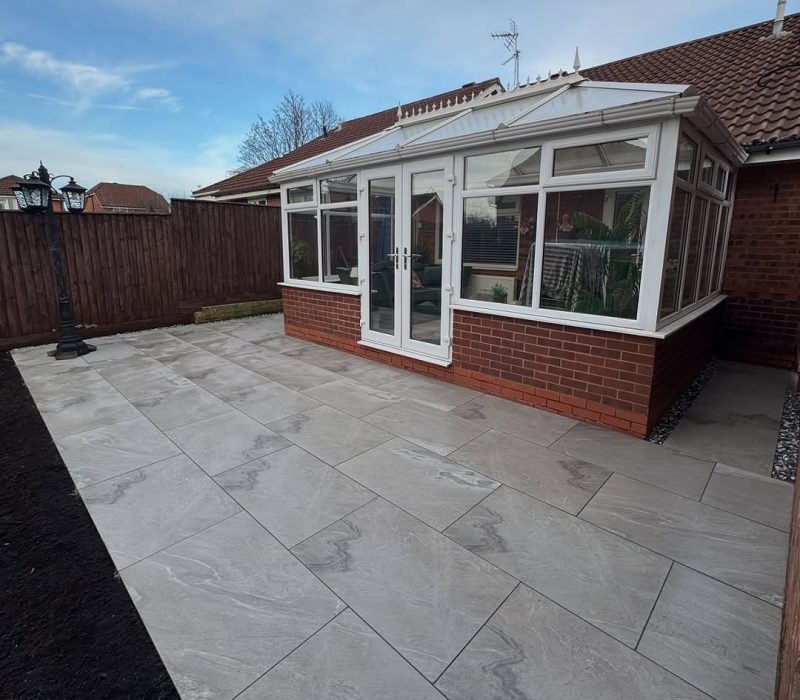
Builder Merchant - Counter Talk: Advising a Customer in Under a Minute
Customers rarely want the full technical story. A short, accurate answer builds trust faster.
- “What does rectified mean?” The edges are cut square after firing, so all the slabs are the same size and sit tightly together.
- “Can I lay them touching?” No. Outdoors they need a joint of around 3 mm or more for movement and drainage.
- “Is it harder-wearing?” Not by itself. Strength comes from thickness and quality. Rectified describes the edge.
- “What goes between them?” A jointing product suited to the joint width. Check the product’s range before you recommend it.
Frequently Asked Questions (FAQs)
Yes, but a cut edge will not match the factory edge. Place cut edges where they will be hidden, such as against a wall or border.
It is not advisable. The two need different joint widths, so the finished surface rarely looks consistent.
The Final Word
Pave World supplies outdoor vitrified porcelain paving in popular formats, with clear technical details on edge finish, thickness and slip rating. Stock is held for trade, with flexible load options and nationwide delivery. For specifications, samples or trade pricing, contact the team or visit the website.