
Sandstone Paving, Unpacked: Ten Customer Questions for you Behind the Merchant Counter That Close the Sale
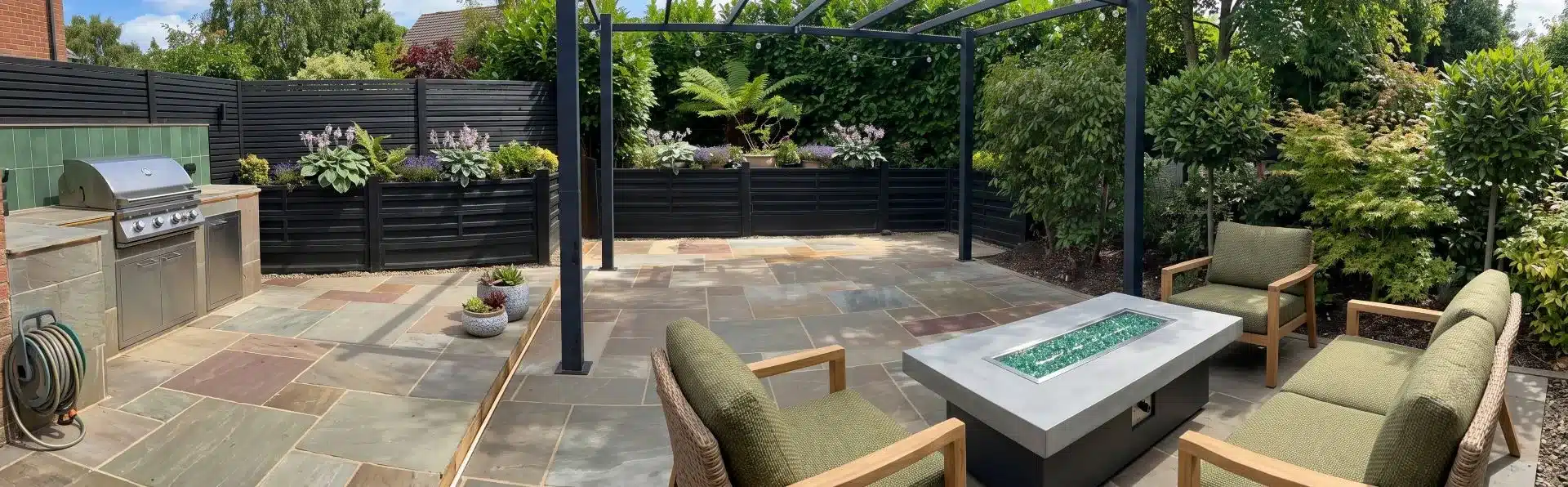
A Pave World briefing for Builder Merchants. Indian sandstone remains one of the most specified natural paving materials in Britain. Trade yards choose it for calibrated packs and colour range. Your customers choose it because it looks like stone that has always belonged in the garden.
A note for UK builder merchants. Sandstone is a line that moves when the pack is honest, the count is clear and the delivery is predictable. Merchants who stock calibrated Indian sandstone — typically 22 mm mixed patio packs in Kandla Grey, Rippon Buff, Raj Green, Mint Fossil and Light Grey — give their landscaper accounts a product they can price, load and lay without surprise thickness or missing pieces. Pave World supplies palletised trade packs with stated coverage, consistent calibration and nationwide delivery, so a merchants’ counter can sell a full 19.5 m² pack, a split requirement or a matching circle kit from one source. Account pricing, sample boards for the trade desk and repeatable SKUs matter as much as colour. If the merchant’s customer is a ground worker who needs the same grey next month, the stone must match the last load. That reliability is what keeps sandstone on the rack rather than as a one-off special order.
Below are ten questions we hear most often at Pave World — answered without the usual catalogue clichés.
1. Why Does Indian Sandstone Still Win British Patios?
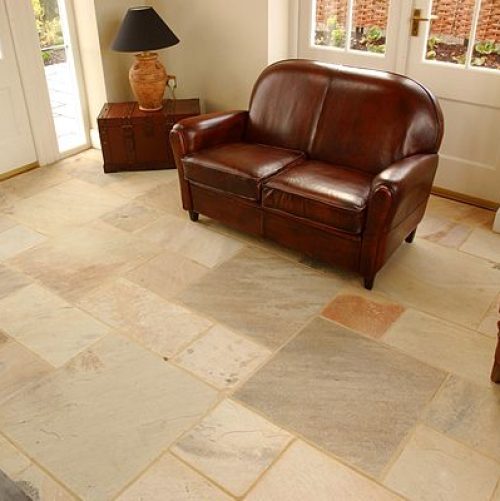
Sandstone is a sedimentary rock formed under pressure over geological time. That origin gives it compressive strength suitable for patios, paths, steps and light commercial hardstanding. Combined with a wide natural palette — buff, grey, green-olive, pink and multi-blend — it sits comfortably against brick, render and planting. At Pave World we supply calibrated Indian sandstone Paving (typically 22 mm for residential work) so thickness is consistent pack to pack, which reduces site cutting and speeds laying.
2. Will a British Winter Break the Slabs?
Correctly specified and laid sandstone is frost-resistant for UK conditions. Water uptake is modest; a well-compacted Type 1 sub-base, a full mortar bed (not dabs) and open joints that drain will do more for longevity than any surface treatment. Poor installation — rocking slabs, trapped water, picture-frame staining — shortens life far more than weather itself.
3. Can You Walk on It After Rain Without Slipping?
A natural riven face has inherent texture. That cleft surface sheds water and offers grip underfoot when clean. Algae and moss, not the stone, are what make paving treacherous. Monthly sweeping and occasional rinsing keep the riven profile working. Smooth or honed faces look contemporary but need more attention in shaded, damp gardens.
4. Does Sunlight Steal the Colour?
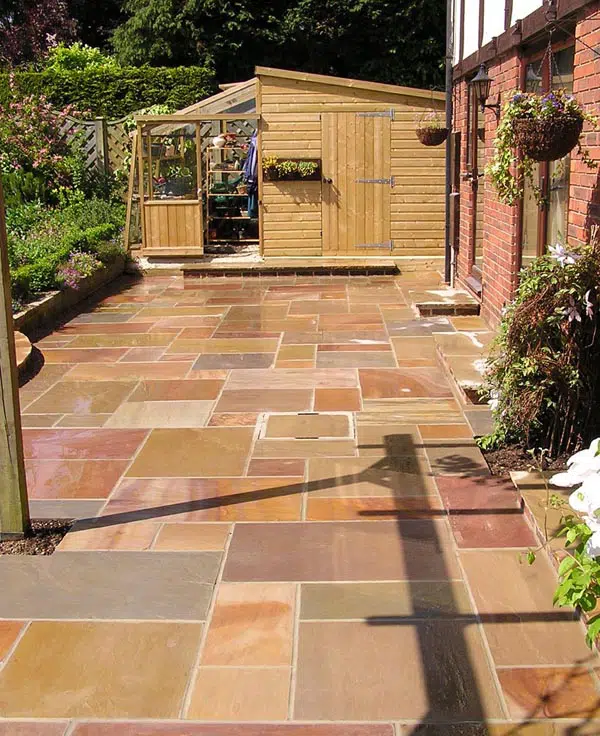
Prolonged, intense sunlight can soften the richest tones over years. That gentle weathering is part of how natural stone ages; many clients prefer the settled look to a factory-fresh slab. Greys such as Kandla and Light Grey hold their character well. Warmer blends — Rippon Buff, Raj Green, Mint Fossil, Autumn Brown — develop a quieter, lived-in depth rather than a harsh bleach.
5. What Does “Low Maintenance” Actually Mean?
It means a broom and a hose, not a specialist contract. Remove leaves and grit so they do not grind into joints. Avoid high-pressure washing at close range, which can open the face and scour pointing. Proprietary aftercare products exist; they are optional, not mandatory. The stone itself is robust; neglect of joints and drainage is what creates work later.
6. Should You Seal Sandstone — Or Leave It Alone
There is no single industry rule. Sealers can reduce staining and ease cleaning on busy entertaining terraces. They can also alter appearance and, if the wrong product is used, trap moisture. Discuss the site with your landscaper: exposure, tree cover, barbecue use and whether you want a wet-look finish. Sample a spare slab before committing a whole patio.
7. How Do You Lift Stains Without Replacing a Flag?
Most household marks respond to warm water and a mild detergent. Oil and rust need a stone-safe cleaner formulated for sandstone, applied according to the manufacturer and rinsed thoroughly. Avoid undiluted bleach as a default; it can lighten the face unevenly. Act early. Deep-set organic staining is harder than last night’s barbecue spill.
8. Riven, Sawn or Brushed — Which Face Belongs Where?
- Riven — split along the natural bed. Texture, grip, traditional character. Best for family patios and paths.
- Sawn — machine-cut faces and often six-sided calibration. Cleaner lines for contemporary schemes; pair with a light texture if slip is a concern.
- Brushed / honed — refined surface for display areas with lighter footfall.
9. Which Colours Travel Best From Quarry to a UK Garden?
Natural variation is the point. Popular lines include:
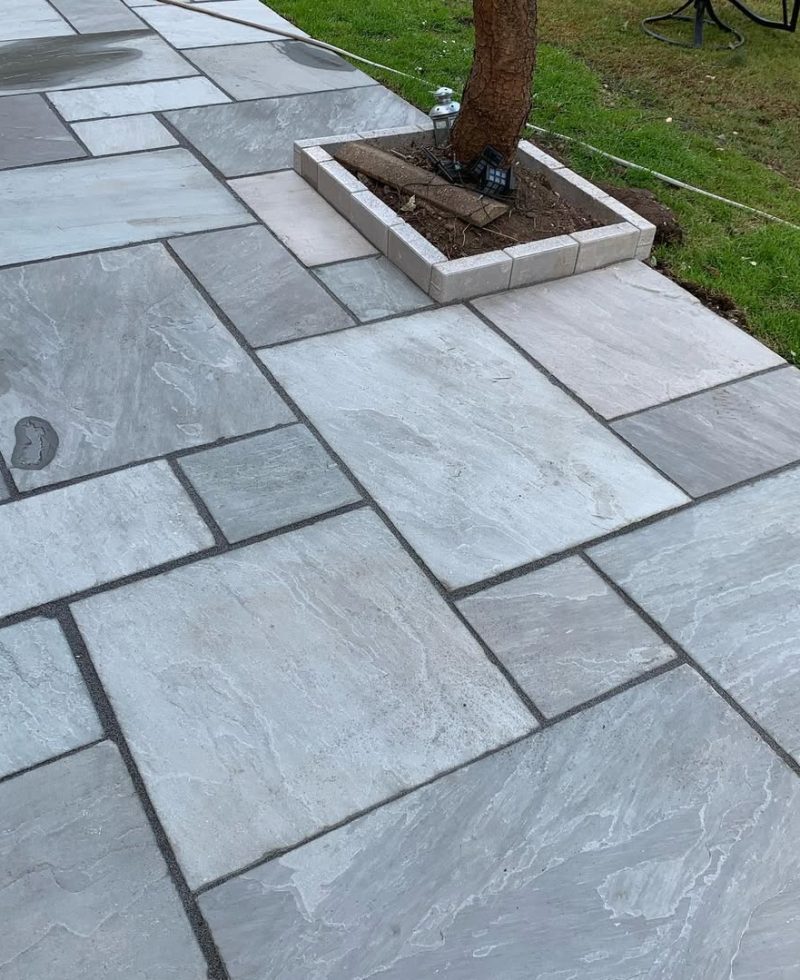
- Kandla Grey — cool, versatile, named for the Indian region associated with the grey beds.
- Rippon Buff / Camel Dust — warm buff with pink movement.
- Raj Green — olive, brown and occasional purple.
- Mint Fossil — lighter multi-tone with fossil interest.
- Light Grey and Autumn Brown — quiet grey or richer russet-brown schemes.
10. How Many Decades Can You Expect From a Patio?
A well-built sandstone patio commonly lasts 10–15 years and often longer. Three variables dominate: installation quality, drainage, and how hard the surface is used. Heavy furniture dragged daily will mark any natural stone. Occasional sweeping and sound pointing protect the investment more cheaply than replacement.
Bonus: What Is Kandla Grey, Precisely?
Kandla Grey is a trade name for grey Indian sandstone associated with stone from the Kandla / Kutch corridor. It is valued for silvery-grey consistency with subtle tonal shift — a reliable match to modern brick and render. It is not a separate mineral; it is a colourway within the sandstone family.
Sandstone Paving is not a miracle surface. It is a well-understood natural product that rewards proper bedding, sensible joints and ordinary care. If you are specifying packs, circle kits or trade quantities, Pave World can advise on thickness, finish and delivery from our UK operation. Connect with our team for queries or quotes; email is info@paveworld.co.uk