
Universally Compatible Kandla Grey Sandstone Paving: The Must-Have Stock Line for Your Yard
The Story Behind Kandla Grey Natural Stone
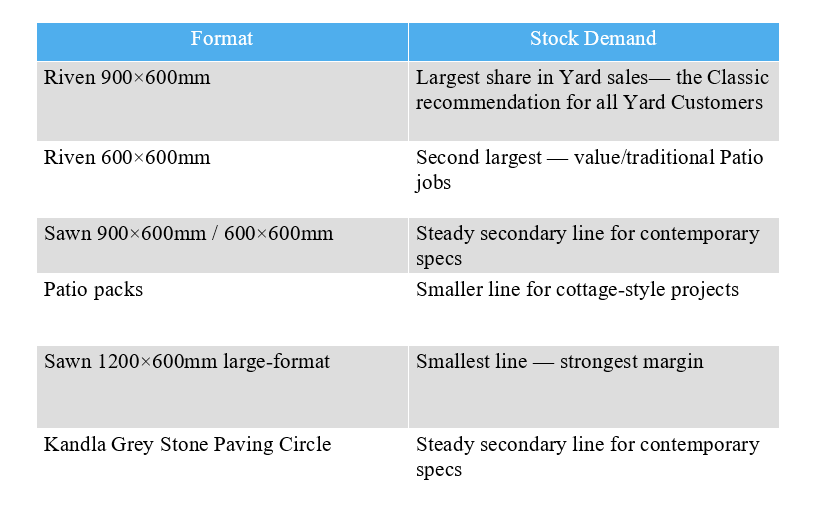
Formats worth holding, and a starter stock mix
Riven finish: 900×600mm is the standout volume seller and the safest first line to stock. 600×600mm suits traditional and value-led jobs. Patio packs (mixed sizes) are popular with landscapers working cottage-style gardens and give you a way to move smaller-format stone as part of a full pack rather than as individual odd sizes.
Sawn/honed finish: 900×600mm and 600×600mm cover contemporary specs, and 1200×600mm large-format commands strong margin on premium jobs where clients want a sleek, minimal look.
What it looks like in practice — and why that's a selling point
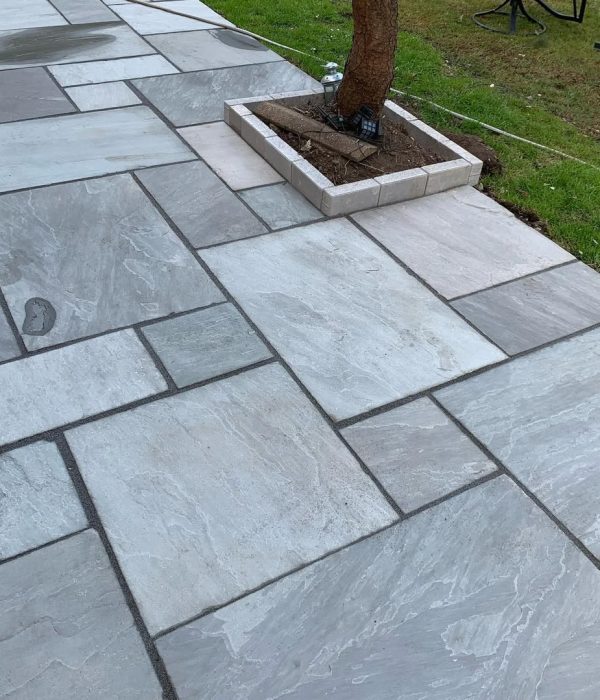
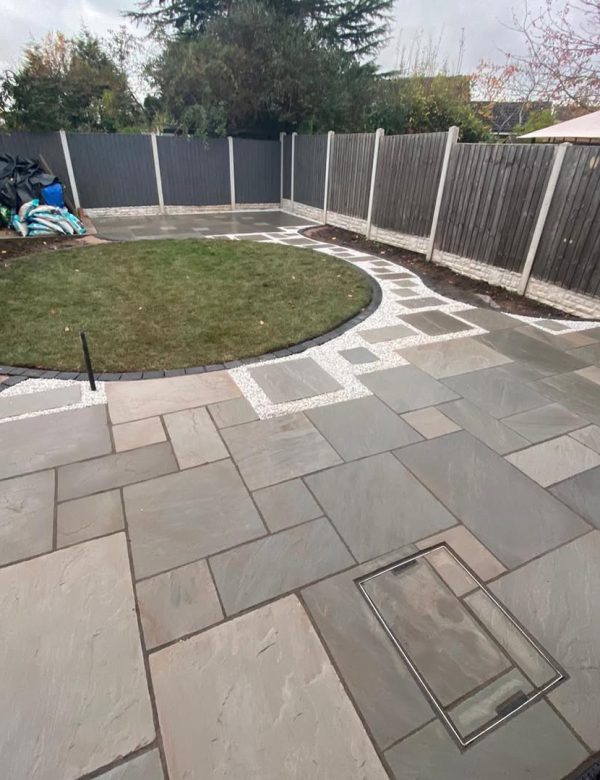
Dry: light silver-grey with warm undertones, some slabs leaning slightly blue-grey and others slightly brown-grey — a soft, neutral tone that shifts subtly through the day as light changes.
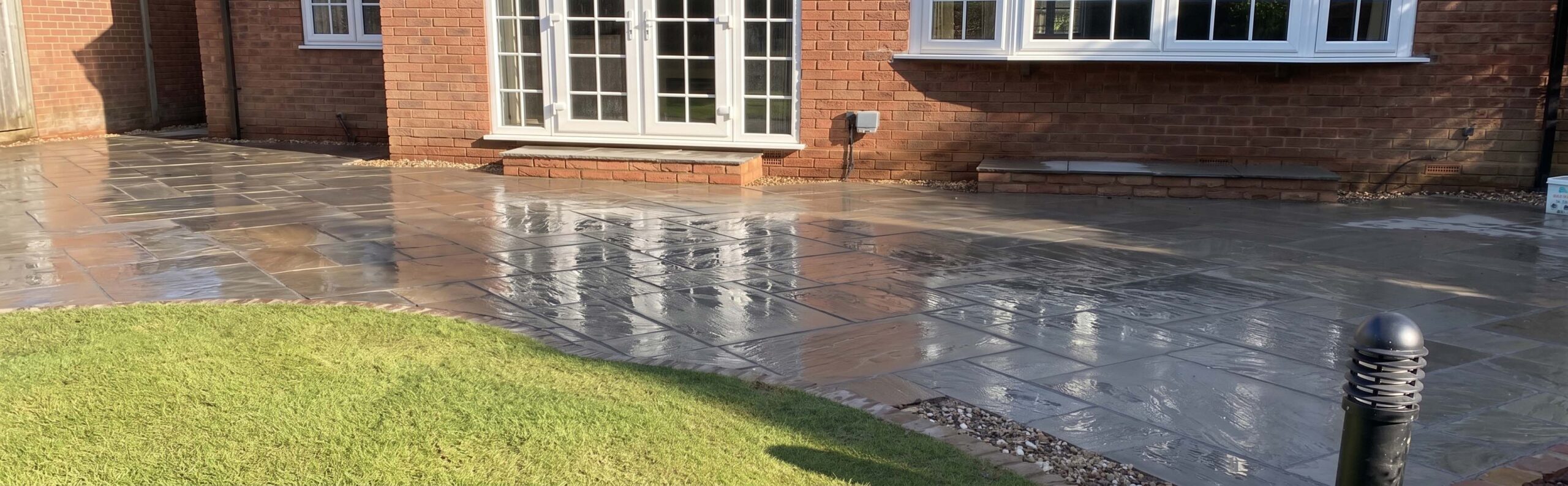
Wet: darkens significantly towards charcoal grey, with the natural variation between slabs standing out more. After rain, a Kandla Grey patio looks noticeably richer than in dry conditions — a look many customers specifically request once they’ve seen it.
Sealed: a colour-enhancing sealer deepens the wet-look appearance permanently, while a clear impregnating sealer preserves the dry look while adding stain protection. Knowing the difference between the two sealer types is a useful thing for counter staff to be able to explain confidently, since it’s a common follow-up question.
Installation considerations worth passing on
Specification and design pairing
- Edging: Anthracite Black porcelain planks are a popular pairing — a darker frame around a lighter patio. Silver Grey granite setts work beautifully as a natural stone border too.
- House and brick colour: Kandla Grey sits comfortably against grey render, white render, red brick, London stock brick, yellow stone, and timber cladding alike, which is a large part of why it suits nearly every job that comes through the door.
- Planting: Green foliage — lavender, ornamental grasses, box hedging, ferns — reads beautifully against the silver-grey tone, and it’s a simple, confident recommendation for staff to make.
- Furniture: Dark grey or black metal furniture, the most popular outdoor furniture colour in the UK, pairs naturally, while warm wood tones like teak and acacia add an attractive contrast.
Five reasons it outsells every other paving colour
- Universal compatibility. Grey works with every house type, brick colour, planting scheme, and furniture style, which makes it close to a no-risk recommendation for any customer’s project.
- Timeless, not trendy. Grey has held the #1 spot in UK paving for over a decade, while buff and brown tones move in and out of fashion — a steadier, more predictable seller season to season.
- Available in every format. Riven, sawn, setts, patio packs — one colourway covers virtually every spec a customer could ask for, which simplifies stocking and matching.
- Resale value. Estate agents and developers consistently favour grey paving for garden upgrades, since it appeals to the widest range of buyers — a strong argument for customers weighing up colour for a property they intend to sell.
- Ages gracefully. Sandstone develops a natural patina that most homeowners see as an improvement rather than wear — a genuine long-term selling point.
Frequently Asked Questions (FAQs)
It’s quarried in the Kandla region of Rajasthan, India — an established source with consistent, high-volume supply.
Neither outperforms the other — riven suits traditional, non-slip, easier-to-lay projects, while sawn suits precision-led, contemporary specs. Holding both means every customer gets the finish their project actually calls for.
It benefits from sealing for improved stain resistance and colour enhancement, though it performs well unsealed too.
It develops a natural patina over years that softens and deepens the colour — most homeowners consider it an improvement rather than a change to manage.