
The US Midterms 2026: What a Democratic Congress
Means for Trade, Freight and Your Paving Stock
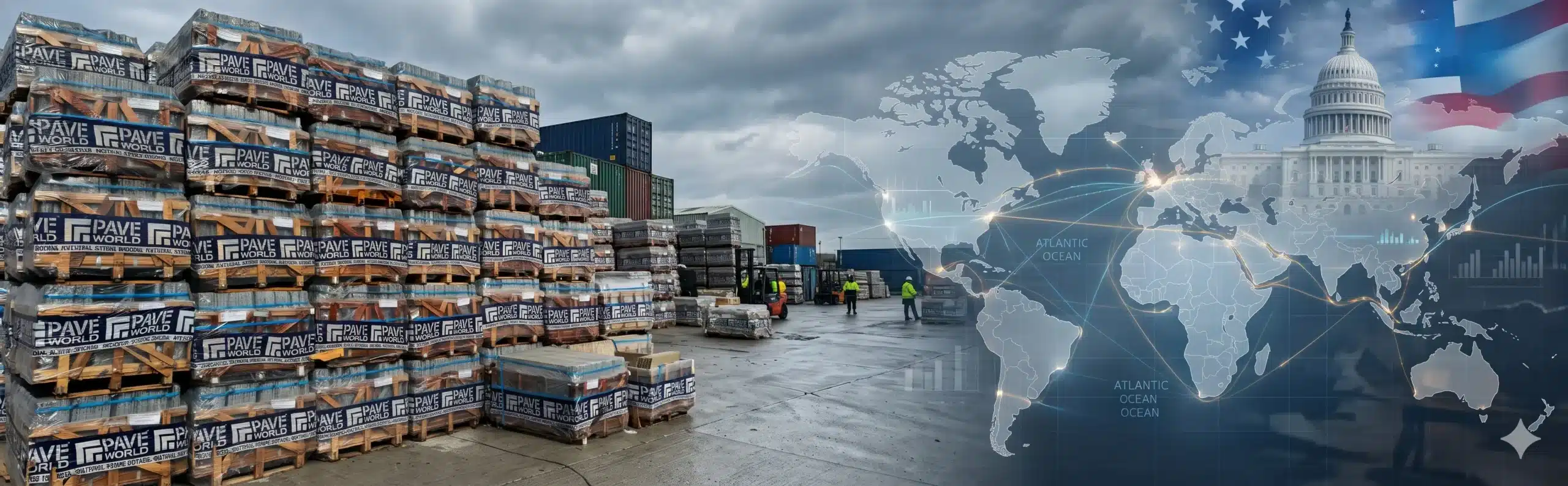
A US midterm election can feel remote from a builder’s merchant yard in Doncaster, Dorset or Dundee. For anyone stocking imported Porcelain Paving or Natural Stone Paving, the distance is shorter than it appears. American trade policy influences where the world’s goods are routed, how fully ships are utilised, and what carriers charge on every major trade lane.
Here is a clear look at what changed on 5 November 2026, what it may affect, and what it is unlikely to change for UK paving importers and merchants.
The Current Election Saga

Why UK Merchants Should Pay Attention
Three channels matter, in order of directness:
- Tariffs reshape trade flows – US tariff levels influence which origins are competitive, which routes fill first and how carriers price capacity across the global network.
- Container ships form a shared pool – A surge or collapse in US-bound demand leads carriers to reposition vessels and equipment. Asia–Europe capacity and rates can feel the effect even when European demand itself is unchanged.
- Uncertainty changes ordering behaviour – Importers advance or delay shipments when policy direction is unclear. Both actions move freight markets.
What Congress Can and Cannot Do on Tariffs
Tariffs featured heavily in the campaign. The Atlantic Council noted Democratic plans for an early legislative push that includes efforts to roll back measures widely criticised in exit polling. Tools available to the new Congress include formal votes of disapproval, committee hearings, attempts to reclaim delegated trade powers, and targeted relief (for example on Canada).
These tools are real but limited. Most tariff authorities were already delegated to the president. A change in congressional control does not automatically rewrite existing measures. The president can veto legislation, and courts continue to shape the boundaries of executive trade powers. Moody’s and several trade lawyers have indicated that worldwide tariffs are likely to remain largely intact over the next twelve months. Many companies would welcome simple stability after two years of rapid change.
How Effects Could Reach Ocean Freight
- Front-loading – If tariff relief becomes probable, US importers may accelerate orders. Back in 2018, tariff increases on Chinese goods produced sharp spikes in transpacific rates. Now a reverse rush could tighten capacity and encourage carriers to favour the transpacific over Asia–Europe.
- Trade diversion – Changes in US rules can redirect production and cargo toward or away from European destinations.
- Sentiment and demand – The same cost-of-living pressures that shaped the midterms also influence US import volumes. A stronger or weaker American consumer alters global container demand.
What the Election Does Not Change
A Balanced View
Practical Steps for UK Builder Merchants
- Plan on the basis that current tariff and freight conditions continue into 2027 unless a concrete, legally effective change occurs.
- Watch the early January legislative calendar for signals rather than headlines. Symbolic votes that cannot override a veto are different from measures that alter landed cost.
- Keep core paving lines covered. Lead times for winter and early-spring replenishment mean that orders placed now largely determine what is available in March and April.
- Share forward volume expectations with suppliers so that stock and vessel allocations can be aligned before the seasonal rush.
- Expect short-term volatility around policy announcements even when underlying law has not yet changed.
How Pave World Is Approaching the Period
Frequently Asked Questions (FAQs)
They could if tariff expectations trigger a surge of US-bound cargo that tightens global capacity. They could equally remain unaffected. It is too early to forecast either outcome with confidence.